Nubra Valley is the descent after Khardung La — here's how to sequence Diskit, Hunder and Turtuk, what the Environment Fee actually costs, and why this should be your first overnight out of Leh, not an afterthought.
In this article
- Nubra is a descent, not just another stop — and that changes how you should plan it
- The route: Leh to Diskit to Hunder
- Permits: what actually changed and what it costs
- What to actually do in a day (and what to skip)
- Where this fits if you're doing Pangong or Tso Moriri too
- Frequently asked questions
- Do I need a permit for Nubra Valley?
- How far is Nubra Valley from Leh?
- Is Nubra Valley higher or lower altitude than Leh?
- What's the best time to visit Nubra Valley?
- Should I stay in Diskit or Hunder?
- Is the camel ride at Hunder worth doing?
Nubra is a descent, not just another stop — and that changes how you should plan it
Most Ladakh itineraries list Nubra Valley as "day 3: cross Khardung La, see the dunes, come back." That framing misses the one thing that actually matters operationally: Khardung La tops out near 5,359 m, and Nubra itself sits at roughly 3,000–3,200 m — noticeably lower than Leh. That makes Nubra one of the few directions out of Leh where you're descending, not climbing, which is exactly why we'd rather send a group here on their first overnight out of town than save it for later in the trip. You get the psychological win of crossing a famous high pass, then your body actually gets a break at altitude. Doing it the other way — Nubra last, after Pangong or Tso Moriri — means you're adding one more high crossing on top of accumulated fatigue, for no real benefit.
The route: Leh to Diskit to Hunder
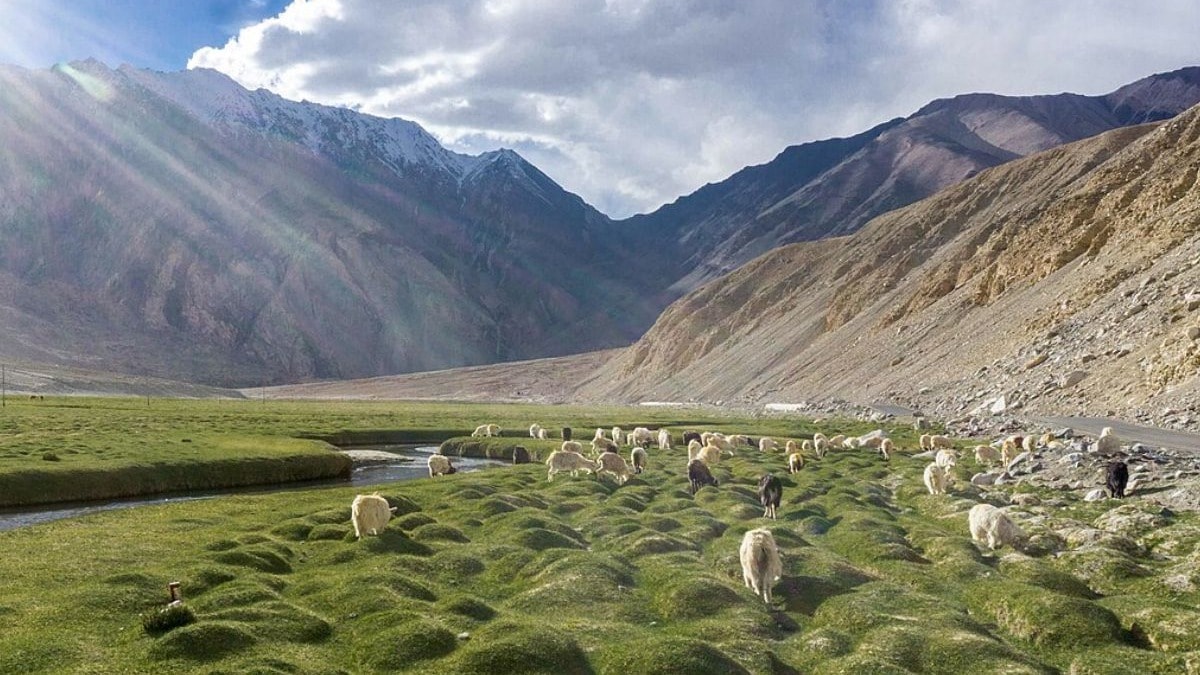
The standard road is Leh → South Pullu → Khardung La → North Pullu → Khardung village → Diskit, roughly 120 km, and the drive genuinely takes 5–6 hours once you count the checkpoint stop at South Pullu (permit verification, ID checks — keep photocopies handy, the queue moves faster if you're not fumbling for your phone) and the inevitable photo stop at the pass itself, which gets crowded with bikers and taxis by mid-morning. Diskit is the valley's administrative anchor — its monastery is the oldest and largest in Nubra, and the 106-foot Maitreya Buddha statue on the hillside above town is visible well before you arrive. From Diskit it's another 10 km to Hunder, where the landscape genuinely surprises first-timers: pale sand dunes running up against snow-capped ridgelines, with double-humped Bactrian camels — descendants of the old Silk Route trade caravans — grazing between them.
Leave Leh early. Not "aim for 8 AM" early — actually on the road by 6:30–7 AM if you want Khardung La before the tour-bus convoy and Diskit monastery before the afternoon light goes flat. Groups that leave late spend their Nubra day mostly in transit and get to Hunder for a rushed, crowded camel ride at dusk, which is the version of this trip nobody remembers fondly.
Permits: what actually changed and what it costs
This is a place where outdated blog posts genuinely mislead people. Indian nationals no longer need a separate Inner Line Permit for Nubra — that requirement was folded into the Ladakh Environment and Development Fee (EDF), applied for online through the government portal at lahdclehpermit.in. Budget roughly ₹400 as a one-time fee plus about ₹20 per day for the wildlife/environment component; a week-long Ladakh trip typically works out to somewhere around ₹550–₹600 per person once the optional Red Cross contribution is added. This single EDF receipt covers Nubra, Pangong Tso, Tso Moriri, Hanle and several other protected areas — you don't need a separate one for each. Foreign nationals still go through a different process: a Protected Area Permit arranged through a registered Leh-based travel agent, and it typically can't be filed as a solo traveller — most agents require a minimum of two names on the paperwork. Apply for either permit a day ahead in Leh if you can; doing it the morning you leave adds an hour you didn't plan for.
Rules and fee structures around Ladakh's protected areas have shifted more than once in recent years, so treat the figures above as a solid planning estimate rather than gospel — confirm the current fee on the official portal before you travel.
What to actually do in a day (and what to skip)
Diskit Monastery deserves 45 minutes to an hour — climb up to the Maitreya statue for the view down the valley, not just the monastery interior. In Hunder, the camel ride is genuinely worth doing once (it's a short, gentle loop through the dunes, not a trek), but don't build your whole day around it — the queues peak between 3 and 5 PM when tour groups converge, so ride earlier if you can. The dunes themselves are worth an unhurried walk at golden hour even if you skip the camel ride entirely. If you have a second night, push on to Turtuk — a Balti village near the Line of Control that only opened to tourists in 2010, with a completely different architecture and culture from the rest of Ladakh, and noticeably fewer visitors than Hunder. It's a further 80 km-ish from Hunder and worth it if your itinerary has the slack; skip it on a tight two-night Ladakh loop rather than rushing everyone through.
Where this fits if you're doing Pangong or Tso Moriri too
If your route also covers Pangong and Tso Moriri or the Hanle and Umling La route, sequence Nubra first. It's the gentlest re-entry to altitude after Leh, both lakes sit higher (Pangong around 4,250 m, Tso Moriri and Hanle higher still), and arriving at those with a completed acclimatisation night behind you — rather than stacking your first two high-altitude nights back to back — is the difference between a trip that feels manageable and one where half the group is nursing headaches on day four. We've seen both versions play out, and the sequencing matters more than people expect going in.
Frequently asked questions
Do I need a permit for Nubra Valley?
Indian nationals now pay the Ladakh Environment and Development Fee online (roughly ₹550–₹600 for a week, covering Nubra along with Pangong, Tso Moriri and Hanle) instead of a separate Inner Line Permit. Foreign nationals need a Protected Area Permit through a registered Leh agent, usually with a minimum of two travellers.
How far is Nubra Valley from Leh?
Around 120 km to Diskit via Khardung La, roughly 5–6 hours including the pass stop and checkpoint formalities; Hunder is another 10 km beyond Diskit.
Is Nubra Valley higher or lower altitude than Leh?
Lower — Nubra sits around 3,000–3,200 m against Leh's roughly 3,500 m, even though you cross Khardung La at over 5,300 m to get there. That's what makes it a good first overnight out of Leh rather than an extra strain.
What's the best time to visit Nubra Valley?
Roughly May through September, once the Leh–Manali and Srinagar–Leh highways and Khardung La are reliably open. Conditions change year to year, so check current road status before you travel.
Should I stay in Diskit or Hunder?
Hunder, if you want to be near the dunes for an early or late-light walk without the day-trip crowds. Diskit works fine too and puts you closer to the monastery, but Hunder has the better range of camps and guesthouses for an overnight stay.
Is the camel ride at Hunder worth doing?
Once, yes — it's a short, easy loop through the dunes rather than a trek, and worth it for the Bactrian camels alone. Go earlier in the day if you can; the queues get long between 3 and 5 PM.
Planning a Ladakh trip that actually accounts for acclimatisation? Our Ladakh bike trip via Tso Moriri and the Hanle and Umling La route both sequence Nubra early for exactly this reason. If you're still deciding between routes into Ladakh, our guide to Manali vs Srinagar to Leh covers that decision. Browse all our trips for more.
Wondrr Team
Travel Curators