Every trek gets called "beginner-friendly" online. Here's an honest breakdown of four genuinely first-trek-worthy Himalayan routes, matched to fitness, altitude tolerance and the season you're travelling in.
In this article
- The four, side by side
- Triund: the true first trek
- Kasol to Kheerganga: gentle trail, big reward
- Chopta to Chandrashila: the biggest step up
- Kedarkantha: easy trail, hard cold
- How to actually choose
- Frequently asked questions
- Which is the easiest of these four treks?
- Do I need prior trekking experience for any of these?
- Which trek has the least altitude risk?
- Can beginners do a winter trek like Kedarkantha?
- How much walking per day should I expect?
- Plan your first Himalayan trek with us
Best Himalayan Treks for Beginners: Honest Difficulty, Altitude and Season
Nearly every trek in the Himalayas gets marketed as "beginner-friendly" somewhere online, which makes the label almost useless. A first trek should be chosen on three things that actually matter: how much altitude you're gaining, how cold it gets, and whether the season you're travelling in works for that specific route. We run four Himalayan treks that we'd genuinely put in front of a first-timer, and each one earns that spot for a different reason.
The four, side by side
Before the detail, here's the honest shape of each trek. Altitude and cold — not distance — are what separate an easy weekend walk from a trek that needs real preparation.
- Triund (Dharamshala) — tops out around 9,350 ft, a single steep day up and back down, minimal cold-weather planning needed outside winter.
- Kasol to Kheerganga (Parvati Valley) — reaches roughly 9,700 ft, a gentler multi-day trail through forest with a hot spring at the end, more about stamina than altitude.
- Chopta to Chandrashila (Uttarakhand) — the highest of the four at around 13,000 ft, includes the Tungnath temple as a natural rest point before the steeper summit push.
- Kedarkantha (Uttarakhand, winter) — around 12,500 ft, an easy trail made genuinely hard by sub-zero summit-night cold rather than the climbing itself.
Triund: the true first trek
Triund is where we'd point someone who has never trekked before and isn't sure they'll enjoy it. It's steep in patches but short enough to do as a single long day from McLeodGanj, and the payoff — a ridge with the Dhauladhar range rising directly behind camp — arrives fast. Below 10,000 ft, altitude sickness is a non-issue here; the real challenge is simply sustained uphill walking, which makes it the most forgiving route to test your fitness against. For the full route breakdown, timing and camping rules, see our Triund trek guide.
Kasol to Kheerganga: gentle trail, big reward
Kheerganga asks less of your legs per day than Triund's steep push, spreading the climb over a longer, gentler trail through pine forest along the Parvati river. The natural hot spring at the top is genuinely one of the better trek-end rewards in the Himalayas, and the altitude — under 10,000 ft — keeps this firmly in easy territory for anyone with reasonable walking fitness. It pairs naturally with time in Kasol and the Parvati Valley if you want to extend the trip. Read our Kasol to Kheerganga trek page for route and pacing detail.
Chopta to Chandrashila: the biggest step up
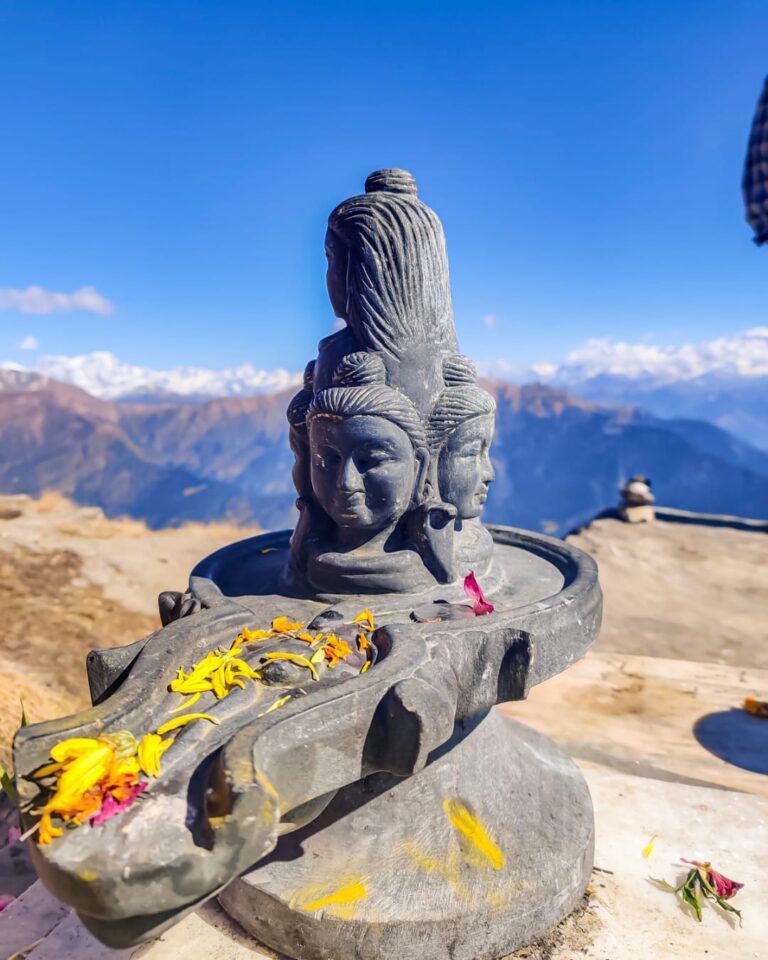
This is the trek where "beginner-friendly" needs an asterisk. Chandrashila's summit sits nearly 3,700 ft higher than Triund, and that gap matters — thinner air, colder mornings, and a longer sustained climb on summit day. What makes it manageable for a fit first-timer is the natural staging point at Tungnath temple roughly two-thirds of the way up, which breaks the ascent into two honest, gettable pieces rather than one long grind. We'd steer a true first-time trekker toward Triund or Kheerganga first and treat Chandrashila as the next step up. Full route detail is on our Chopta to Chandrashila trek page.
Kedarkantha: easy trail, hard cold
Kedarkantha is the odd one out on this list because its difficulty isn't really about the trail — it's about winter. The walking is genuinely gentle, comparable to Kheerganga in effort, but it's done in temperatures that fall to -10°C to -15°C on summit night, with a pre-dawn start over snow and ice. If you're choosing this as a first trek, the preparation that matters is cold-weather gear and stamina, not hiking experience. We cover the full pacing and packing logic in our Kedarkantha winter trek guide.
How to actually choose
If you want the lowest-risk introduction to trekking, start with Triund or Kheerganga — both stay under 10,000 ft, need no specialised cold-weather gear outside peak winter, and are forgiving if your fitness turns out to be lower than you thought. If you're already reasonably fit and want a genuine high-altitude experience with a bit more structure, Chandrashila is the next rung up. If winter scenery is the draw and you're prepared to invest in proper cold-weather layers, Kedarkantha delivers a real snow summit without technical difficulty. Season matters as much as altitude: Triund and Kheerganga are largely doable outside peak monsoon (July-August) and deep winter, Chandrashila is best April-June or September-November, and Kedarkantha is specifically a winter route running mid-November through April.
Frequently asked questions
Which is the easiest of these four treks?
Kheerganga, in terms of sustained effort per day, though Triund is shorter overall. Both stay under 10,000 ft and don't require cold-weather trekking experience outside winter months.
Do I need prior trekking experience for any of these?
No — all four are run as guided treks suitable for first-timers with reasonable fitness. Kedarkantha and Chandrashila benefit from a few weeks of cardio prep beforehand given the altitude and, for Kedarkantha, the cold.
Which trek has the least altitude risk?
Triund, at around 9,350 ft, carries essentially no meaningful altitude sickness risk for most trekkers. Chandrashila, at roughly 13,000 ft, is where altitude first becomes a real factor, though still moderate by Himalayan standards.
Can beginners do a winter trek like Kedarkantha?
Yes, but the preparation shifts from fitness to cold-weather readiness — proper layering, microspikes, and a sleeping bag rated well below 0°C.
How much walking per day should I expect?
Typically 4-6 hours across all four treks, with Chandrashila's summit day and Kedarkantha's pre-dawn push being the longer, more demanding days on each respective route.
Plan your first Himalayan trek with us
Whichever altitude and season suit you, we run all four of these as guided treks with honest pacing built around each route's real difficulty — not a marketing label. Explore the Triund trek, Kasol to Kheerganga trek, Chopta to Chandrashila trek, or Kedarkantha winter trek, or see everything we run on our trips page.
Wondrr Team
Travel Curators