Rishikesh isn't just a rafting town. Here's how to sequence a non-rafting day around the Ganga aarti, a pre-dawn Kunjapuri sunrise, and the quieter spots most itineraries skip.
In this article
- Ganga Aarti: which ghat, and when
- Kunjapuri sunrise: worth the early alarm
- Quieter spots worth finding
- How to sequence a non-rafting day
- Frequently asked questions
- What time is the Ganga Aarti in Rishikesh?
- Is the Kunjapuri sunrise trip worth the early start?
- Can I do Kunjapuri and rafting on the same day?
- How far is Kunjapuri from Rishikesh?
- Is Vashishta Guha worth visiting if I'm not into meditation?
- What pairs well with a rafting day in Rishikesh?
- Plan your Rishikesh trip with us
Things to Do in Rishikesh Beyond Rafting: Aarti, Kunjapuri Sunrise and Quieter Corners
Rafting gets most of the attention when people plan a Rishikesh trip, and it deserves it — but building a whole itinerary around a 2-3 hour river run leaves a lot on the table. Rishikesh has a genuine rhythm outside the rapids: a nightly aarti that pulls the whole town to the riverbank, a pre-dawn viewpoint most rafters never wake up for, and quieter corners the day-trip crowd doesn't bother finding. Here's how we'd sequence a non-rafting day, and what pairs well with one.
Ganga Aarti: which ghat, and when
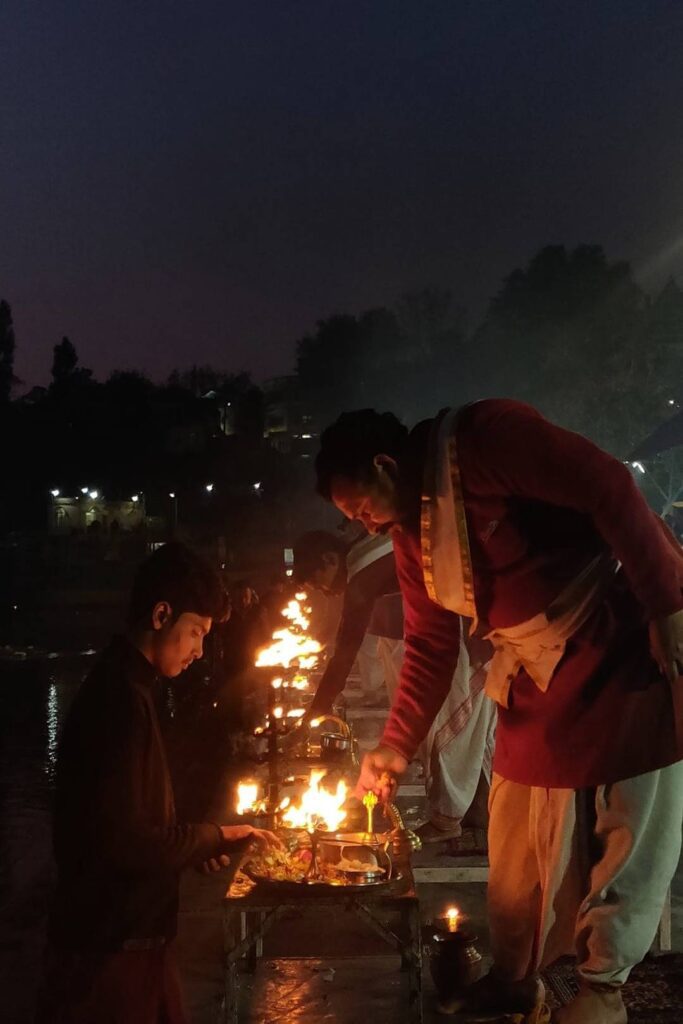
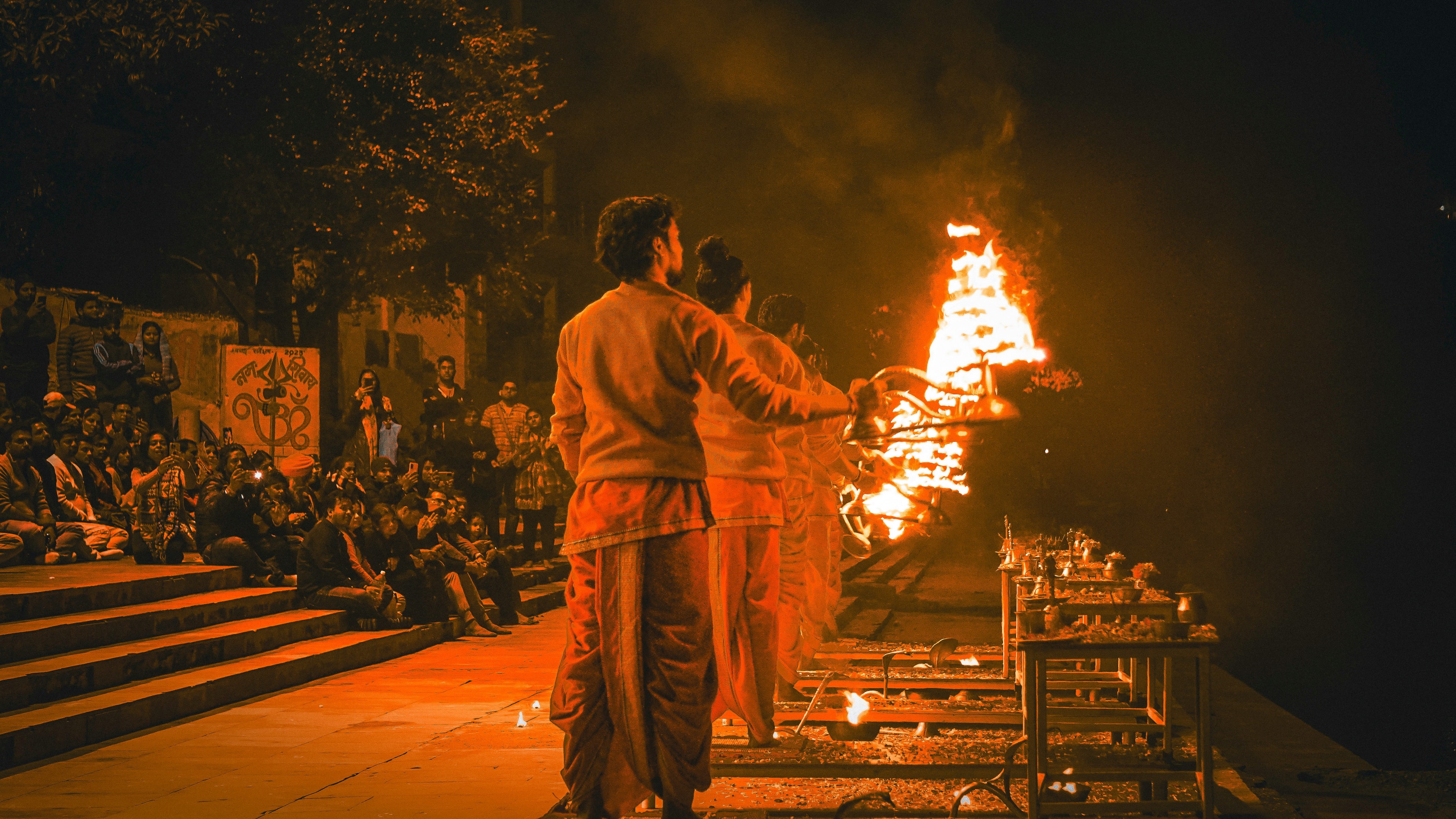
Rishikesh runs the Ganga Aarti at two main ghats every evening, and they're genuinely different experiences. Parmarth Niketan's aarti is the more polished, meditative version — rows of saffron-robed volunteers, structured chanting, and a calmer crowd. Triveni Ghat's aarti is louder and more communal, with drums, conch shells and a bigger local turnout. Timing shifts with the season: expect roughly 6-7pm in summer and 5:30-6:30pm in winter, with Parmarth Niketan typically starting about half an hour earlier than Triveni Ghat. There's also a quieter morning aarti at both ghats around 5:45am if you're an early riser and want the ritual without the evening crowd. Arrive 20-30 minutes early for a good spot on the steps — the evening aarti draws a real crowd in peak season.
Kunjapuri sunrise: worth the early alarm
Kunjapuri Devi Temple sits at around 1,650 metres, roughly 28 km and about an hour's drive from Rishikesh, and it's one of the better sunrise viewpoints in the region — the temple looks out over the Ganga valley on one side and a wide sweep of snow-capped Himalayan peaks on the other, weather permitting. Most operators run this as a pre-dawn drive most of the way up, with a short final walk to the temple itself, timed to reach the top just before sunrise. If you want more of a workout, a longer trekking route up from the base exists and takes several hours — but for a straightforward sunrise trip that doesn't wreck your whole morning, the drive-and-short-walk version is what most visitors do. Either way, layer up: pre-dawn temperatures at 1,650m are noticeably colder than down in Rishikesh, even in summer.
Quieter spots worth finding
Vashishta Guha, an ancient meditation cave about 25 km up the Badrinath road, draws a genuinely different crowd than the main ghats — people come for silence, not sightseeing, and it's worth visiting in that spirit rather than as a quick photo stop. Neer Garh Waterfall, a short walk off the main road toward Lakshman Jhula, is an easy add-on for an afternoon if you want a swim without committing to a full trek. For a slower pace, Rishikesh's café scene along the Tapovan side of the river — many with river or valley views — is a legitimately good way to spend a few unhurried hours between the more scheduled parts of a trip.
How to sequence a non-rafting day
If you're pairing this with a rafting trip, the aarti works naturally as an evening activity the day before or after your river day — it needs no advance planning beyond showing up on time. Kunjapuri is the one that needs deliberate scheduling since it's a pre-dawn start; we'd suggest doing it on a day with no rafting booked, since a 4-5am wake-up followed by an afternoon on the river makes for a genuinely long day. A relaxed non-rafting day might run: sleep in, café time and a short walk to Neer Garh in the late morning, then the evening aarti — leaving Kunjapuri for a separate early morning when you're not also rafting.
Frequently asked questions
What time is the Ganga Aarti in Rishikesh?
Roughly 6-7pm in summer and 5:30-6:30pm in winter at Triveni Ghat, with Parmarth Niketan starting about 30 minutes earlier. There's also a quieter version around 5:45am at both ghats.
Is the Kunjapuri sunrise trip worth the early start?
Yes, on a clear day — the combined Ganga valley and Himalayan-range view is one of the better vantage points near Rishikesh. Check weather before committing, since cloud cover can obscure the mountain view.
Can I do Kunjapuri and rafting on the same day?
It's possible but not ideal — Kunjapuri needs a 4-5am start, and combining that with an afternoon rafting session makes for a very long day. We'd split them across two days if your schedule allows.
How far is Kunjapuri from Rishikesh?
About 28 km, roughly an hour's drive one way, plus a short walk to the temple itself for most visitors.
Is Vashishta Guha worth visiting if I'm not into meditation?
It's a quieter, more contemplative stop than the main ghats — worth it if you want a slower pace, less so if you're looking for an active sightseeing stop.
What pairs well with a rafting day in Rishikesh?
The evening Ganga Aarti pairs easily with any rafting day since it needs no early start. Save Kunjapuri for a separate, dedicated morning.
Plan your Rishikesh trip with us
We build in time for the aarti and other non-rafting experiences alongside the river, rather than treating Rishikesh as a single-activity stop. Check out our Rishikesh rafting trip for dates, or see everything we run on our trips page.
Wondrr Team
Travel Curators