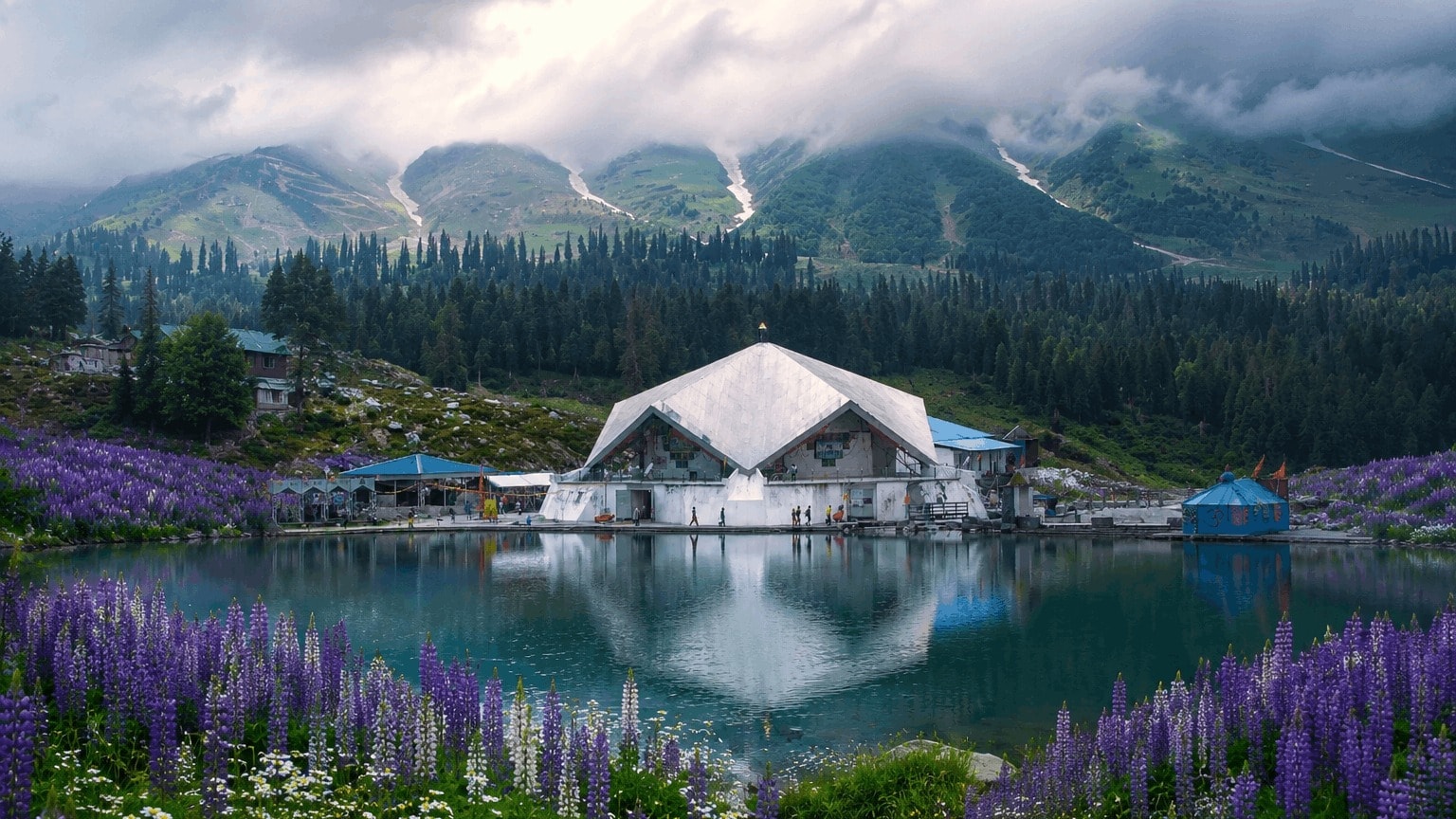
Hemkund Sahib looks like an add-on to the Valley of Flowers trek. The last 6km say otherwise. Here's the honest route, altitude risk and opening dates.
In this article
- The route: Govindghat to the gurdwara
- Altitude sickness: this is the trek's real risk, not the distance
- Difficulty compared to Valley of Flowers
- Opening and closing dates
- Frequently asked questions
- How long is the Hemkund Sahib trek?
- How difficult is the Hemkund Sahib trek?
- Can I stay overnight at Hemkund Sahib?
- Is altitude sickness a real risk on this trek?
- When does Hemkund Sahib open and close?
- Trek to Hemkund Sahib with us
Hemkund Sahib Trek: The 6km Climb from Ghangaria, Opening Window and Altitude Reality
Hemkund Sahib gets bundled into Valley of Flowers itineraries as a side trip, which undersells it badly. The 13km from Govindghat to Ghangaria is a genuinely moderate warm-up. The 6km from Ghangaria up to the gurdwara itself is a different animal — a steep, rapid climb that gains close to 4,000ft, and it's the part most first-timers underestimate.
The route: Govindghat to the gurdwara
Govindghat, on the Rishikesh-Badrinath highway, is the last motorable point and where the trek begins. From there it's roughly 13km to Ghangaria, a moderate trail that most people complete in 5-7 hours and treat as the base camp for both Hemkund Sahib and Valley of Flowers. The real work starts the next day: Ghangaria sits at around 9,600ft, and Hemkund Sahib sits at approximately 14,200ft (4,329m) — a climb of nearly 4,000ft in just 6km, taking most trekkers 4-5 hours up. There's a strict no-overnight-stay policy at the top; everyone descends back to Ghangaria the same afternoon, which means your ascent pace has to leave enough daylight for the way down too.
Altitude sickness: this is the trek's real risk, not the distance
A peer-reviewed pilot study on pilgrims at Hemkund Sahib found an overall AMS prevalence of 28% — 20% mild, 8% severe — and the mechanism is straightforward: you're gaining roughly 2,500m of net altitude from the road-head in one or two days, well within the range where AMS becomes a real possibility for anyone, not just unfit trekkers. The same study flagged a related detail worth knowing: average water intake on the climb was only about 0.9 litres, and one in five pilgrims drank no water at all during the ascent. Hydration on its own isn't proven to prevent AMS specifically, but under-hydration on a steep, exertive climb at this altitude still degrades how your body copes with the effort — carry more water than feels necessary, and pace the last 6km deliberately rather than rushing to beat the crowd.
Difficulty compared to Valley of Flowers
If you're doing both, know that they're not equally hard. Valley of Flowers is a relatively gentle walk through a national park once you're past Ghangaria. Hemkund Sahib's final stretch is steeper and more sustained than anything on the Valley of Flowers side, and it's worth treating as a separate, harder day rather than an easy add-on — plan a rest day in Ghangaria if your schedule allows, rather than doing both trails back to back on tired legs.
Opening and closing dates
Hemkund Sahib operates on a strict seasonal window tied to snow clearance: it typically opens in the last week of May (commonly cited as 23-25 May) and closes in early-to-mid October. For 2026 specifically, sources point to a closing date around 10 October. These dates shift year to year based on snowfall and army/gurdwara-committee clearance timelines, so treat any specific date as indicative and confirm current-year status closer to your travel dates rather than booking against it blindly.
Frequently asked questions
How long is the Hemkund Sahib trek?
About 13km from Govindghat to Ghangaria, then roughly 6km (one way) from Ghangaria up to Hemkund Sahib — around 19km one-way in total, done over two days with an overnight in Ghangaria.
How difficult is the Hemkund Sahib trek?
Moderate overall, but the final 6km from Ghangaria is steep and demanding, gaining nearly 4,000ft quickly — harder than the Govindghat-Ghangaria stretch or the neighbouring Valley of Flowers trail.
Can I stay overnight at Hemkund Sahib?
No — there's a strict no-overnight policy at the top. Everyone descends back to Ghangaria the same day, so pace your ascent with the return descent in mind.
Is altitude sickness a real risk on this trek?
Yes. A pilot study found 28% AMS prevalence among pilgrims. Hydration isn't proven to prevent AMS specifically, but staying well-hydrated helps your body cope with the exertion of the climb — don't rush the final stretch.
When does Hemkund Sahib open and close?
Typically late May (around 23-25 May) to early-mid October, though exact dates shift yearly with snow conditions — confirm current status before you travel.
Trek to Hemkund Sahib with us
We run this alongside Valley of Flowers as a properly paced multi-day trip. Check out our Valley of Flowers and Hemkund Sahib trek or the Valley of Flowers trek on its own. Browse everything we run on our trips page.
Wondrr Team
Travel Curators