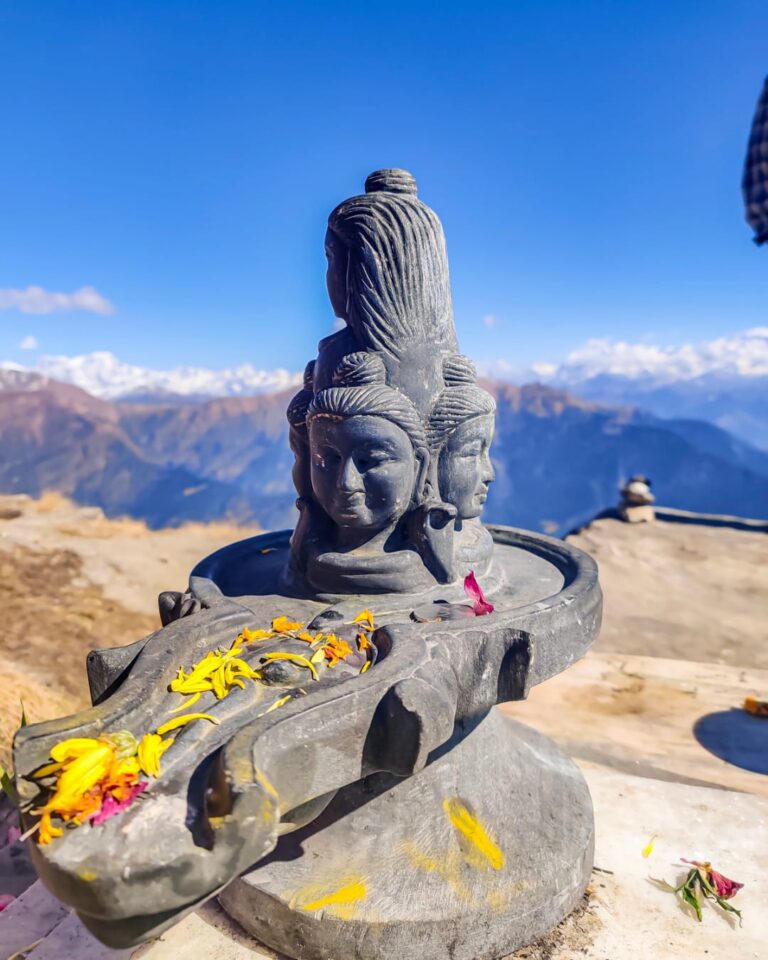
Tungnath and Chandrashila get treated as one trek online, but they're genuinely different commitments. Here's who should stop at the world's highest Shiva temple and who should continue to the summit.
In this article
- The route to Tungnath
- Why Tungnath is worth treating as its own destination
- Tungnath vs Chandrashila: who should continue
- Best time and what to expect
- Frequently asked questions
- How long is the Chopta to Tungnath trek?
- Is Tungnath suitable for beginners and families?
- Do I have to continue to Chandrashila once I reach Tungnath?
- What's the best time to visit Tungnath?
- Is Tungnath open year-round?
- Plan your Chopta trip with us
Chopta to Tungnath Temple: The Easy Day-Hike (Not the Chandrashila Summit)
Search for "Chopta Tungnath trek" and most results blur it together with Chandrashila, treating the temple as just a checkpoint on the way to the summit. That undersells Tungnath badly. It's the highest Shiva temple in the world, one of the five Panch Kedar shrines, and a genuinely worthwhile standalone half-day trek for anyone who doesn't want — or isn't ready for — the steeper push to Chandrashila's peak. Here's the honest distinction.
The route to Tungnath
From Chopta, it's roughly 3.5 km one way to the temple, climbing to around 3,680 metres. Most trekkers take 2-3 hours going up and 1.5-2 hours coming back down, on a trail that's well-marked and paved for much of the way — a real point of difference from rougher Himalayan trails. The grade sits in the easy-to-moderate band: steady uphill walking rather than technical climbing, which is exactly why it works for families, first-timers, and older trekkers who want a genuine high-altitude temple experience without committing to a summit push.
Why Tungnath is worth treating as its own destination
Tungnath's status as the highest of the five Panch Kedar temples, dedicated to Lord Shiva, gives the trek a pilgrimage dimension that Chandrashila's summit doesn't carry in the same way — people come here specifically for the temple, not just for the view. The setting alone justifies the walk: alpine meadows, rhododendron in season, and increasingly open Himalayan views as you climb. For a lot of trekkers, reaching the temple and taking in that setting is a complete, satisfying half-day trip on its own, not a warm-up for something bigger.
Tungnath vs Chandrashila: who should continue
The confusion online mostly comes from the fact that Chandrashila's summit sits only about 1.5 km further from Tungnath — geographically close, but a meaningfully different trek in practice. That final stretch is steeper, more exposed, and gains real additional altitude on top of what you've already climbed to reach the temple. If you're travelling with young kids, older family members, or simply want a shorter, gentler outing, stopping at Tungnath is a complete and satisfying trip — not a compromise. If you're reasonably fit, have time, and want the wider summit panorama that Chandrashila offers, continuing on is a natural next step from the same trailhead. Either way, know which trek you're actually signing up for before you start, since a lot of trekkers underestimate the jump in effort from Tungnath to the summit.
Best time and what to expect
April through June and September through November give the clearest trail conditions and best visibility. Winter brings snow to the upper trail, which is genuinely beautiful but requires proper trekking shoes, warm layers, and more caution on the steeper sections — this isn't a casual winter walk in the way it is in the shoulder seasons. Whichever season you go, start early: cloud cover tends to build through the day, and morning light gives the best views from the temple.
Frequently asked questions
How long is the Chopta to Tungnath trek?
About 3.5 km one way, taking roughly 2-3 hours up and 1.5-2 hours down.
Is Tungnath suitable for beginners and families?
Yes — the trail is well-marked and largely paved, sitting in the easy-to-moderate range, making it realistic for most fitness levels with basic preparation.
Do I have to continue to Chandrashila once I reach Tungnath?
No — Tungnath is a complete, satisfying trek on its own. Continuing to Chandrashila is a separate, steeper commitment worth deciding on deliberately, not something to drift into.
What's the best time to visit Tungnath?
April-June and September-November for the clearest conditions. Winter adds snow and requires proper cold-weather gear.
Is Tungnath open year-round?
The temple's inner sanctum closes for winter (the deity is ceremonially moved to Mukumath village), typically around November, and reopens in late April or May — check current dates before planning a winter visit. You can still trek to the temple site itself in winter.
Plan your Chopta trip with us
Whether you're stopping at Tungnath or continuing to Chandrashila, we build the pacing around what you actually want from the trek. Check out our Chopta to Tungnath trek or the Chopta to Chandrashila trek for dates, or see everything we run on our trips page.
Wondrr Team
Travel Curators